

“Those who cannot influence others will inevitably be influenced by them.”
İbnü’l Arabi
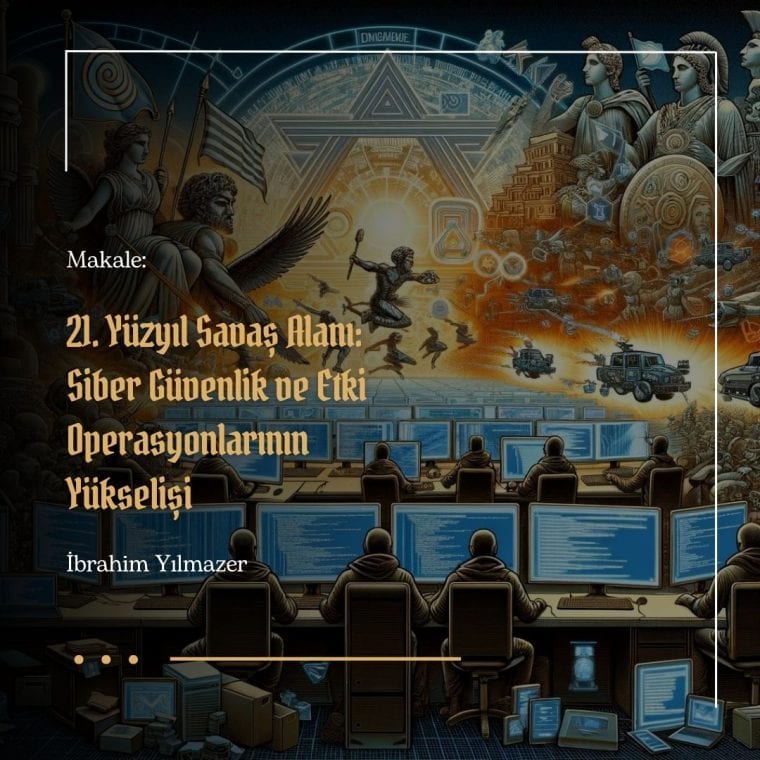
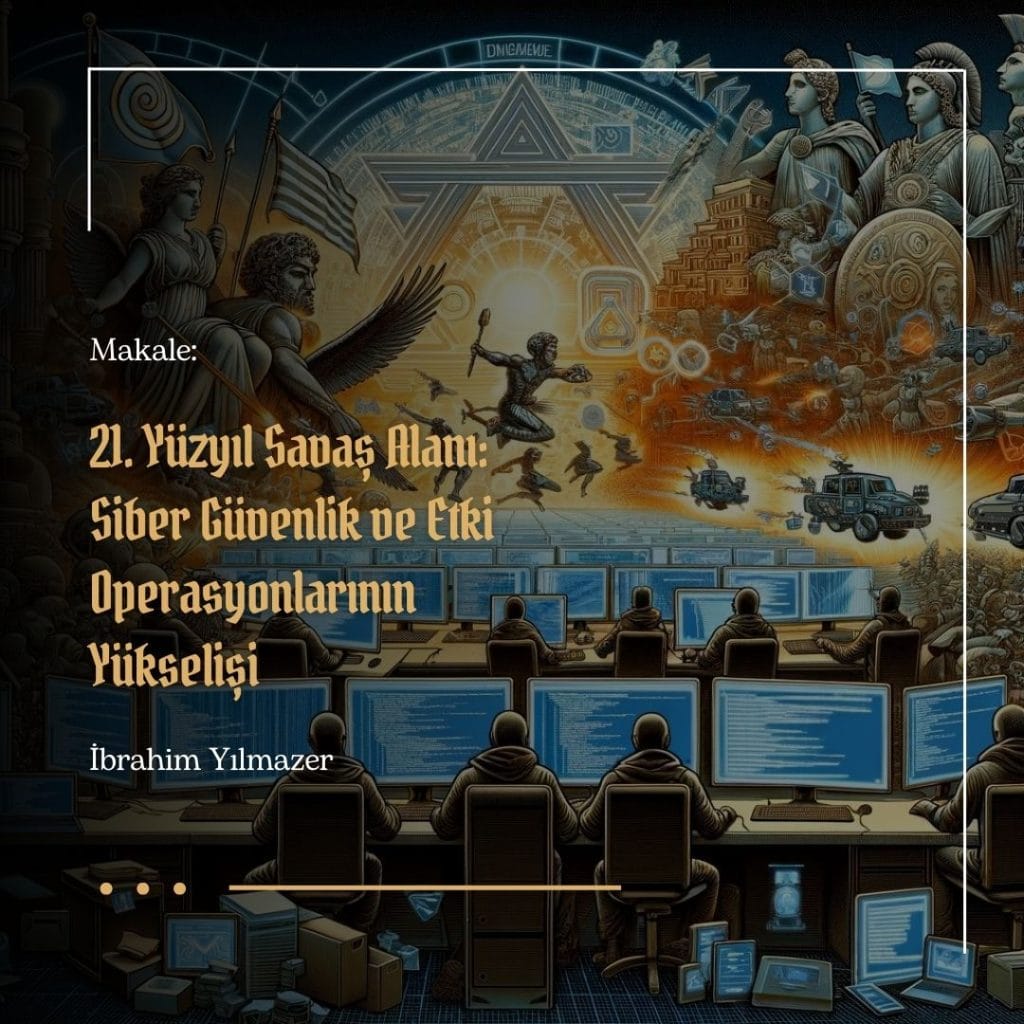
In ancient Greek mythology, the Minotaur is a creature trapped in the depths of a labyrinth; this labyrinth is famous for its intricate paths and the difficulty of finding an exit. Hence, a suitable title for an article could be: “The Minotaur’s Labyrinth: The Complex World of Influence Operations.” This mythical labyrinth perfectly represents the intertwined and complex nature of cybersecurity and influence operations. Today, as individuals and states navigate the labyrinth of the digital age, they must confront the challenges encountered in mysterious corridors.
Influence operations are planned activities where information is strategically used to shape public perception and behavior. These operations are conducted through various techniques such as propaganda, social media manipulation, disinformation, and psychological warfare. Economic, military, political, and diplomatic instruments can be used. With the advancement of technology and the diversification of communication channels, influence operations have become more complex and effective than ever.
The increasing significance of these operations parallels developments on the global political stage. Strategies known since the Cold War have gained a new dimension with the proliferation of the internet and social media. As Jowett and O’Donnell have pointed out, propaganda and influence operations can be defined as “the art of persuading target audiences to a certain thought or action through the strategic use of mass communication tools” (Jowett & O’Donnell, 2014).
In the 21st century, the rise of social media platforms and advancements in digital technology have fundamentally changed how individuals and societies access information. This change has also transformed the methodology of conducting influence operations. With easier access to information, the speed at which disinformation and misleading content spread has increased. According to Woolley and Howard, “cyber armies” and “bots” are increasingly playing a role in manipulating public perception through social media and intervening in democratic processes (Woolley & Howard, 2016).
Another important factor behind the growing focus on influence operations in today’s world is the power struggles in international relations. States and international actors use these operations to protect their strategic interests and influence the policies of their rivals. For example, Russia’s intervention during the 2016 U.S. Presidential Election highlighted the potential impact of influence operations on democracies (Jamieson, 2018).
Moreover, concepts related to influence operations encompass a broad spectrum to understand how these operations are conducted, their goals, and the methods used. Some of the key concepts frequently encountered in this field include:
- Propaganda: The deliberate and systematic dissemination of information, news, or rumors to direct target audiences toward a specific thought or behavior.
- Disinformation: The intentional spread of misleading or false information, often to deceive an enemy or manipulate public perception.
- Psychological Warfare: A set of tactics used to demoralize the enemy, boost the morale of one’s own forces, or attract neutral parties to one’s side.
- Cyber Warfare: War activities conducted through computer networks, the internet, and digital technologies, including attacks on digital infrastructure, data theft, or manipulation.
- Information Warfare: Efforts to gain information superiority by blocking access to an adversary’s information sources, protecting one’s own information sources, and spreading misleading information.
- Social Media Manipulation: Activities aimed at influencing public perception or opinions on social media platforms by spreading misleading information, creating artificial agendas, or generating fake interactions through bot accounts.
- Strategic Communication: Coordinated communication activities aimed at informing, persuading, or influencing target audiences to support an institution’s goals and objectives.
- Political Warfare: A strategy involving the use of political, economic, and psychological pressure tools to interfere in the internal affairs of an adversary and achieve one’s own political goals.
- Public Relations (PR): Communication activities carried out by organizations to manage public perception of themselves and create a positive image.
- Miscommunication: The unintentional spread of misleading information, often resulting from individuals’ misunderstandings or accidental sharing of incorrect information.
These concepts illustrate the complexity and multifaceted nature of influence operations. In the modern world, such operations are becoming increasingly sophisticated and pose significant issues for international relations, politics, security, and individual freedoms.
Indeed, the impact of influence operations and their effects on target audiences can be understood in depth through theories examined in various disciplines such as communication, psychology, political science, and international relations. Propaganda theories focus on how information can be manipulated and how public perception can be shaped; persuasion theories examine effective messaging and communication strategies. Information warfare and cybersecurity theories discuss how technology is used in conflict and security areas. Media effects theories explore the role of media in social and political changes. Psychological warfare theories analyze the psychological tactics used to influence the enemy. Cultural hegemony and conflict theories address the power dynamics and ideological aspects of influence operations. Decision-making theories evaluate the impact of these operations on decision-making processes. This broad theoretical framework helps us understand how influence operations are planned, implemented, and successful.
In conclusion, influence operations have become a critical factor in shaping political and social dynamics in the modern world. Understanding these operations is crucial for both individuals and states to navigate the challenges brought by the information age.
Historical Origins of Propaganda and Influence Operations
The roots of propaganda and influence operations actually date back to the dawn of human history, and these strategies are among the oldest tools used to guide societies and individuals. In ancient Greece, the art of persuasion, known as “persuasia,” was considered one of the cornerstones of democracy. Aristotle, in his work “Rhetoric,” laid the foundations of effective communication by detailing how persuasive speech should be structured (Aristotle, 4th century BC).
In the Roman Empire, propaganda was used to spread the imperial ideology and gain public support. For example, Julius Caesar, in his work “Commentarii de Bello Gallico” (Commentaries on the Gallic War), exaggerated his military successes to increase support from the Roman populace and his influence in the Senate (Caesar, 1st century BC).
During medieval Europe, in addition to religious propaganda used in the spread of Christianity, propaganda was also employed to motivate warriors and persuade large masses during the Crusades. During this period, church sermons and religious texts were primary tools for influence operations.
In the Ottoman Empire, various communication strategies were used to reinforce the sultan’s power and legitimacy. For instance, after the conquest of Istanbul, documents known as “fetihnames” (declarations of victory) highlighted the superiority of the Ottomans and the heroism of Sultan Mehmed II, aiming to shape perceptions both internally and externally.
Although the concept of “influence operations” in the modern sense did not exist during the Ottoman Empire, propaganda and public opinion management efforts were an integral part of the empire’s governance and communication strategies. In its long history, communication with various communities and nations played a decisive role in shaping the empire’s political and social structure. A range of tools, from diplomatic relations and travelers’ accounts to sermons and the development of the press and printing, were used to support the Ottoman image and policies. During this period, travelers’ accounts from Europe played a significant role in conveying information about the Ottoman Empire to the West, while messages disseminated through mosques and educational institutions within the empire were used to spread important information and the sultan’s decrees. Additionally, art and literature served as important tools in reinforcing the Ottoman’s cultural and religious identity and spreading its values.
These various communication efforts, carried out without technological tools and modern communication channels, played a critical role in supporting the Ottoman Empire’s internal and external policies, ensuring social cohesion, and maintaining authority over its vast territories. These historical examples underscore the strategic importance and power of propaganda and influence operations across time and space.
By the 20th century, propaganda became crucial in supporting war efforts and discrediting enemies during the two world wars. During World War I, institutions such as the Creel Committee conducted extensive propaganda activities to increase public support in the U.S. During World War II, Nazi Germany and the Allied Powers organized extensive propaganda campaigns to spread their ideologies and boost morale using mass communication tools.
Key figures in this field include Edward Bernays, known as the father of modern public relations and author of “Propaganda,” who developed techniques for guiding public perception through mass communication tools. Joseph Goebbels, as the Nazi Germany Minister of Propaganda, is remembered for conducting extensive propaganda campaigns through media and communication tools. George Creel led the Creel Committee or the Committee on Public Information during World War I to garner public support for the U.S. war efforts. Ivan Pavlov, through classical conditioning theory, established the psychological foundations of how messages and persuasion techniques can be effective on individual and societal levels.
Important organizations in this field include the U.S.-based CIA (Central Intelligence Agency), which carried out various psychological warfare and influence operations during the Cold War; the Soviet Union’s KGB (Committee for State Security), known for its propaganda and disinformation activities; the UK’s GCHQ (Government Communications Headquarters), which played a critical role in information warfare and cyber operations; and NATO’s StratCom COE (Strategic Communications Centre of Excellence), which conducts research and training on strategic communication, propaganda, and influence operations. These individuals and organizations form the foundation of theoretical and practical work in the field of influence operations.
The history of influence operations is closely linked with the development of technology and communication strategies. With the proliferation of communication tools like radio, television, the internet, and social media, influence operations have become more sophisticated and capable of reaching wider audiences. The Cold War era stands out as a period when propaganda and counter-propaganda efforts peaked, with many innovative techniques and strategies developed. Today, cyber warfare and social media manipulation are among the most significant elements of influence operations.
This historical flow demonstrates that propaganda and influence operations have the power to affect social and political structures. Although the methods and tools of these strategies have evolved, their fundamental purposes and importance remain largely the same.
Modern Influence Operations: Methods, Actors, Cases
The 21st century has witnessed technological advancements and the emergence of new media platforms that have revolutionized the execution of influence operations. Social media manipulation, disinformation, and cyber attacks are among the most prominent features of modern influence operations.
Social Media Manipulation: Social media has become a critical tool in influence operations due to its ability to rapidly reach large audiences. Woolley and Howard (2016) detail how automated accounts (bots) and coordinated behavior campaigns on social media can shape public perception and political debates.
Disinformation: The deliberate spread of misleading information is used to misguide target audiences and manipulate public perception. Wardle and Derakhshan (2017) analyze the social and political impacts of disinformation, highlighting the harmful effects of these tactics on democratic processes.
Cyber Attacks: Cyber attacks carried out by state-sponsored hacker groups or cybercriminals can target critical infrastructure or leak important information. Rid (2013) examines the role of cyber warfare and cyber espionage in international relations and their significance in influence operations.
Various actors are behind modern influence operations. These actors include states, terrorist organizations, and non-governmental organizations (NGOs).
States: National governments and intelligence agencies conduct influence operations to affect both foreign populations and their own citizens. These operations can be used to interfere in political processes in other countries, direct public perception, or strengthen their own position on the international stage.
Terrorist Organizations: Terrorist groups use social media and other digital platforms for propaganda, recruiting supporters, and creating fear.
Non-Governmental Organizations (NGOs): In some cases, NGOs may also engage in influence operations to spread specific social or political messages. Tufekci (2017) explores how social media has transformed activism and the impact of these platforms on public opinion.
Understanding and analyzing influence operations sheds light on the complex social and political events of today. Some notable cases to examine in this field include:
2016 U.S. Presidential Election: This election has been extensively studied due to allegations of Russia using social media platforms to influence U.S. voters. Jamieson (2018) argues that these operations potentially impacted election results through techniques such as disinformation, fake news, and social media manipulation.
Brexit Referendum: The 2016 referendum in which the UK decided to leave the European Union is a significant case for analyzing the use of misleading information and propaganda techniques spread via social media.
Annexation of Crimea by Russia (2014): Russia’s annexation of Crimea involved information operations and psychological warfare tactics aimed at strengthening pro-Russian sentiments in the region and misleading the international community. Snyder (2015) analyzes this case as an example of how modern influence operations can be conducted on multiple levels.
ISIS’s Use of Social Media: The terrorist group ISIS developed strategies for gaining international support, spreading propaganda, and creating fear through social media. Winter (2017) notes that these operations offer important lessons on how terrorist organizations manage their presence and influence on digital platforms.
Russia’s Information War Against Ukraine: Russia’s information war against Ukraine, starting in 2014, has been detailed by Pomerantsev (2014). Disinformation campaigns, fake news, and psychological operations conducted via social media demonstrate how information can be used as a weapon in modern conflict environments.
China’s Propaganda Activities Against Uighur Muslims: The Chinese government’s strategies for covering up human rights violations against Uighur Muslims and managing international reactions through propaganda and information manipulation have been addressed by Zenz (2019).
These cases illustrate the various ways and objectives for carrying out influence operations. Each offers a rich source for detailed analyses of influence operation methods, targets, and effects.
Turkey and Influence Operations
Due to its geopolitical position and active foreign policy, Turkey has been both a target and a practitioner of various influence operations, both domestically and internationally. In the context of domestic politics, social media platforms and digital communication tools play a critical role in disseminating information that can affect public perception and election outcomes. Additionally, some anti-government movements and social events in Turkey have been perceived as part of influence operations supported by foreign powers, with claims of foreign backing for protests like the Gezi Park demonstrations in 2013 causing significant public debate.
In terms of foreign policy and national security, Turkey has sought to protect its interests and influence rival policies through cross-border influence operations. During military operations in Syria and Iraq, media and digital platforms have been used to support Turkey’s strategic objectives and inform the international community. Turkey’s influence in Libya and its regional policies also reflect efforts to impact regional power balances.
Furthermore, cybersecurity has increasingly gained importance in Turkey’s national security strategy. The country has been enhancing its defense capabilities and protecting critical infrastructure against cyber threats. Particularly after the 2016 attempted coup linked to FETÖ, Turkey has accelerated efforts to bolster its cyber defense and safeguard critical infrastructure. In this context, Turkey’s measures in the cyber domain and strategic approaches to national security aim to improve the country’s resilience against digital threats and cyber attacks.
The Future of Technology and Influence Operations
Artificial intelligence (AI), machine learning, and big data analytics are at the forefront of technologies that will bring influence operations to a new and more sophisticated level. The use of these technologies enhances the ability to understand target audiences and deliver customized content to them, while significantly improving the effectiveness and speed of influence operations. Tufekci (2017) explains how social media platforms, by analyzing user data, can be used for political propaganda and manipulation through targeted advertisements and content. This creates new challenges for democratic processes and individual freedoms.
Deepfake technology, which can produce realistic fake visual and audio materials that are hard to distinguish from real ones, has ushered in a new era in influence operations. This technology can be used to manipulate public perception by creating fake videos or audio recordings of public figures. Paris and Donovan (2019) warn about how this technology can enhance misinformation, fake news, and conspiracy theories. At the same time, automated content production increases the capacity to create propaganda materials on a large scale and quickly, making the control and oversight of this process even more challenging.
Cybersecurity and information warfare have become fundamental components of national security. As states use cyberspace for both defense and offensive purposes, influence operations are increasingly acquiring a cyber dimension. Kello (2017) discusses the future of cyber wars and cyber espionage, highlighting the strategic importance of cybersecurity measures and capabilities. As the diversity and complexity of cyber threats increase, information sharing and collaboration between states and the private sector become more critical.
Ethics and Regulation of Influence Operations
Influence operations pose significant ethical issues and dilemmas due to their power to manipulate information and shape public perception. The ethical dimensions of these operations are questioned due to their potential impacts on individuals’ rights to access information, freedom of expression, and their ability to exercise free will. Wardle and Derakhshan (2017) discuss the harmful effects of information disorder on democratic processes and the ethical boundaries of misleading information and propaganda activities. This is crucial for understanding the impact of influence operations on individuals’ ability to make political and social decisions freely.
The proliferation of influence operations and their increasing complexity with technological advancements necessitate international cooperation and effective regulation. The international community is working to develop a range of regulations and governance mechanisms to limit the negative effects of such operations. These efforts focus on areas such as establishing cybersecurity standards, international cooperation in combating disinformation, and increasing the responsibilities of social media platforms. Gillespie (2018) examines how platform content management policies can be shaped to counter misleading information and build defenses against influence operations. However, these regulations and policies must balance the protection of freedom of expression and access to information.
International institutions such as the United Nations and regional organizations are intensifying their efforts to create standards and cooperation mechanisms for cybersecurity and combating disinformation. These processes shape the regulation of influence operations through national laws as well as multilateral agreements and norms. In this context, international law and norms must be continuously updated to keep pace with rapid technological advancements and effectively address new threats.
Conclusion
The future of influence operations, given the continuous evolution of technology and the dynamic nature of international relations, encompasses many possible scenarios. Technological advancements in areas such as artificial intelligence, machine learning, big data analytics, and deepfakes make influence operations more sophisticated and harder to detect, while also providing opportunities to develop new tools and methods to counter these operations.
These advancements offer both opportunities and challenges. Influence operations have the potential to increase public awareness and education, highlight social issues, and promote positive social change. However, the same technologies also carry risks such as the spread of disinformation, manipulation of public perception, and undermining democratic processes.
Protecting democratic values and individual freedoms is of central importance in this new era. In this context, the following recommendations may be considered:
Education and Awareness: Educational programs aimed at developing media and digital literacy, as well as critical thinking skills, can play a critical role in countering the negative effects of influence operations.
Ethical Use of Technological Innovations: Adopting ethical standards in the development and use of technologies such as artificial intelligence and machine learning can help prevent their misuse for harmful purposes.
Transparency and Accountability: Increasing transparency in content management policies on social media platforms and other digital communication tools, and ensuring these platforms are accountable to users and society, are necessary.
International Cooperation and Regulation: International cooperation and coordination in combating influence operations are crucial given their cross-border nature. International norms and regulations should be developed to regulate these activities and protect democratic processes.
The future of influence operations will be shaped by how societies, states, and the international community respond to these new challenges. While technological advancements offer opportunities, continuous effort is required to protect democratic values and defend individual freedoms.
Ibrahim YILMAZER, March 30, 2024
References
Aristoteles. (M.Ö. 4. yüzyıl). Retorik (Rhetoric).
Cadwalladr, C. (2017). “The great British Brexit robbery: how our democracy was hijacked.” The Guardian.
Gillespie, T. (2018). Custodians of the Internet: Platforms, Content Moderation, and the Hidden Decisions That Shape Social Media. Yale University Press.
Jamieson, K. H. (2018). Cyberwar: How Russian Hackers and Trolls Helped Elect a President. Oxford University Press.
Jowett, G. S., & O’Donnell, V. (2014). Propaganda & Persuasion. Sage Publications.
Kello, L. (2017). The Virtual Weapon and International Order. Yale University Press.
Paris, B., & Donovan, J. (2019). “Deepfakes and Cheap Fakes.” Data & Society.
Pomerantsev, P. (2014). Nothing Is True and Everything Is Possible: The Surreal Heart of the New Russia. PublicAffairs.
Rid, T. (2013). Cyber War Will Not Take Place. Oxford University Press.
Sezar, J. (M.Ö. 1. yüzyıl). Gallia Savaşı Üzerine Yorumlar (Commentarii de Bello Gallico).
Snyder, T. (2015). The Road to Unfreedom: Russia, Europe, America. Tim Duggan Books.
Soldatov, A., & Borogan, I. (2015). The Red Web: The Struggle Between Russia’s Digital Dictators and the New Online Revolutionaries. PublicAffairs.
Taylor, P. M. (2003). Munitions of the Mind: A History of Propaganda from the Ancient World to the Present Era. Manchester University Press.
Tüfekçi, Z. (2017). Twitter and Tear Gas: The Power and Fragility of Networked Protest. Yale University Press.
Wardle, C., & Derakhshan, H. (2017). Information Disorder: Toward an Interdisciplinary Framework for Research and Policymaking. Council of Europe Report.
Weimann, G. (2015). Terrorism in Cyberspace: The Next Generation. Columbia University Press.
Welch, D. (2013). Propaganda, Power and Persuasion: From World War I to WikiLeaks. I.B. Tauris.
Winter, C. (2017). Media Jihad: The Islamic State’s Doctrine for Information Warfare. I.B. Tauris.
Woolley, S. C., & Howard, P. N. (2016). Political Communication, Computational Propaganda, and Autonomous Agents. International Journal of Communication.
Zenz, A. (2019). “Brainwashing, Police Guards and Coercive Internment: Evidence from Chinese Re-education Camp Documents.” Journal of Political Risk.
The article “21st Century Battlefield: The Rise of Cybersecurity and Influence Operations” appears to be a well-researched piece. It delves into the complexities of modern cybersecurity threats and influence operations, discussing their implications and the measures needed to counteract them. The structure, depth of analysis, and use of references indicate that it is a genuine research article aimed at informing readers about these critical issues. Please extend my deepest congratulations to its author!